Breathwork in Malaysia
What it is, what happens in a session, who it suits, and where to try it. Written for people who have never done it before.
Last updated: September 2026
Quick answer
What is breathwork?
Breathwork is a wellness practice that uses intentional changes to your breathing — its pace, its depth, and the balance between inhale and exhale — to support relaxation, body awareness and emotional regulation. Some techniques are calming, some are activating, and some simply build awareness of how you already breathe.
The underlying idea is straightforward: breathing is one of the few bodily functions that runs automatically but that you can also take over deliberately. That makes it a practical point of entry when you want to shift how you feel without having to think your way there. It is a practice rather than a treatment — it may support relaxation and help people manage everyday stress, and it does not replace medical or mental-health care.
What happens in a breathwork session?
Four stages, in this order. The sequence is deliberate.
Notice
You observe how you are breathing right now — faster, shallower, held — and what that reflects about your current state. Nothing is corrected yet.
ArriveBe aware
Structured attention on body, breath and emotional state, so tension that usually stays in the background becomes something you can identify and name.
LocatePractise
Guided breathing techniques you can repeat on your own — at a desk, before a difficult conversation, or at the end of a long day.
Take awayRest
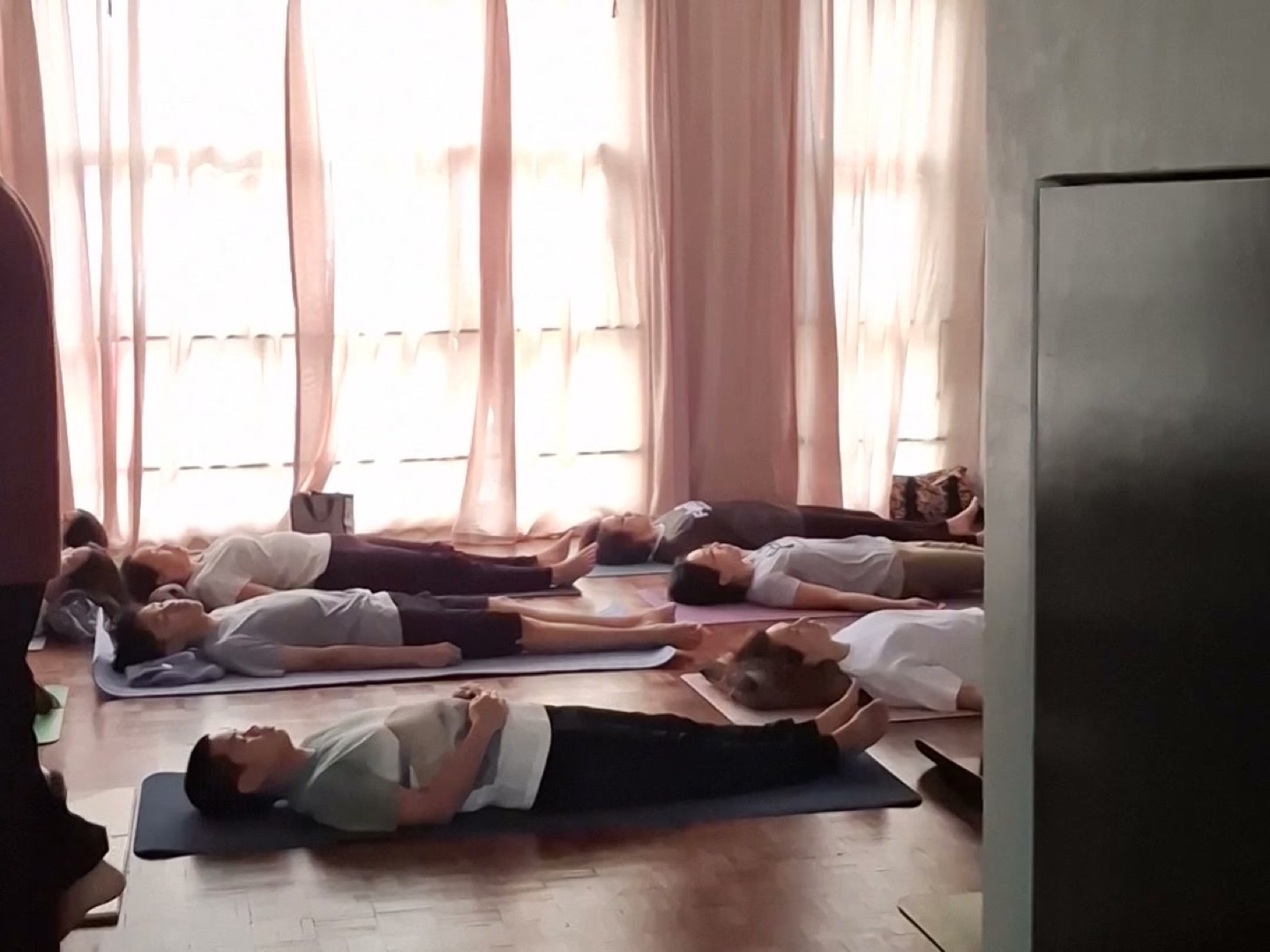
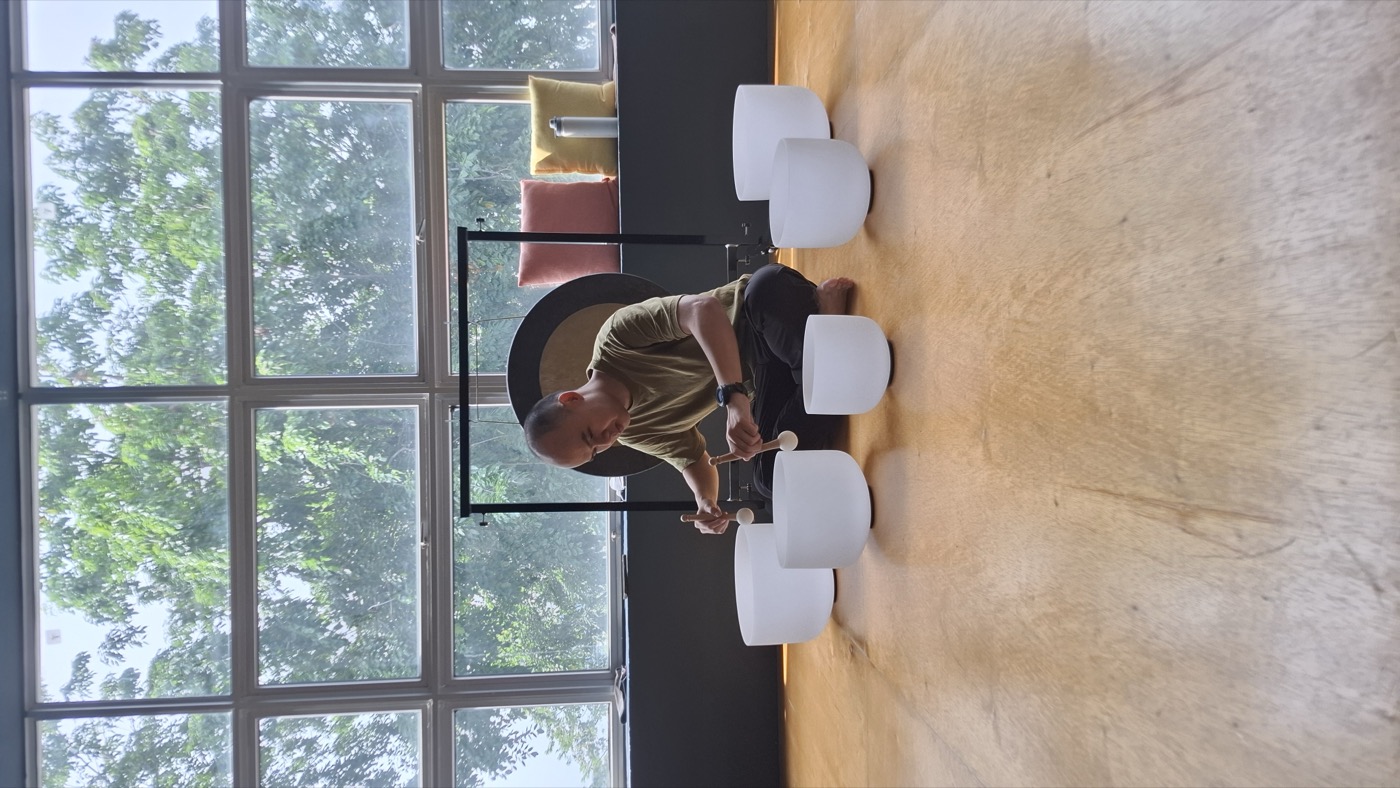
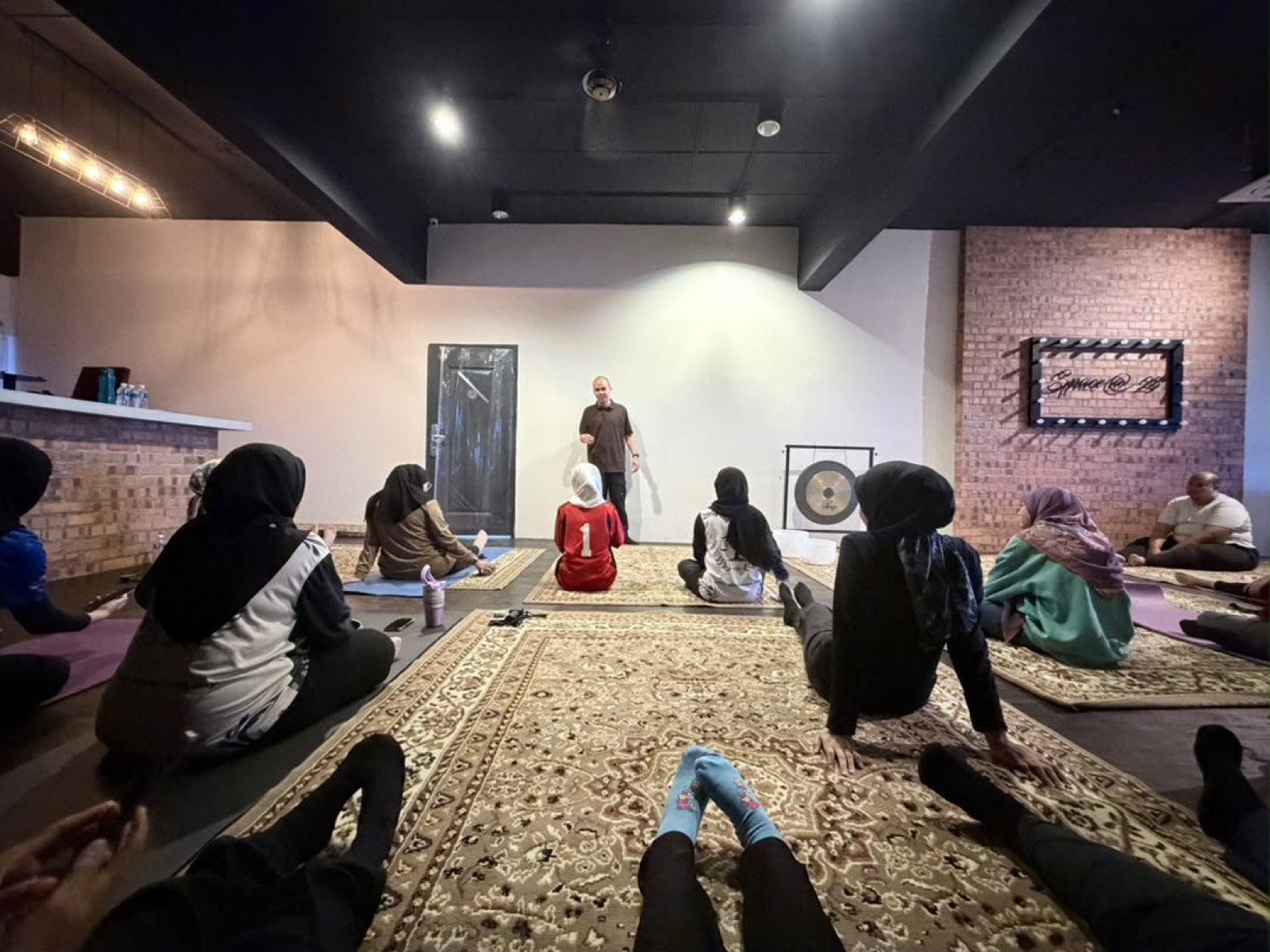
The session closes with you lying down while crystal singing bowls, gong and chimes are played live in the room. Nothing is pre-recorded.
CloseSwipe or scroll →
Most sessions elsewhere ask people to relax on command while their mind is still moving at the pace of the day. Here the active work comes first and the rest comes last — by which point the body is actually ready for it. A 1-on-1 session runs 90 minutes; a corporate session runs 90 minutes or four hours.
Who is breathwork suitable for?
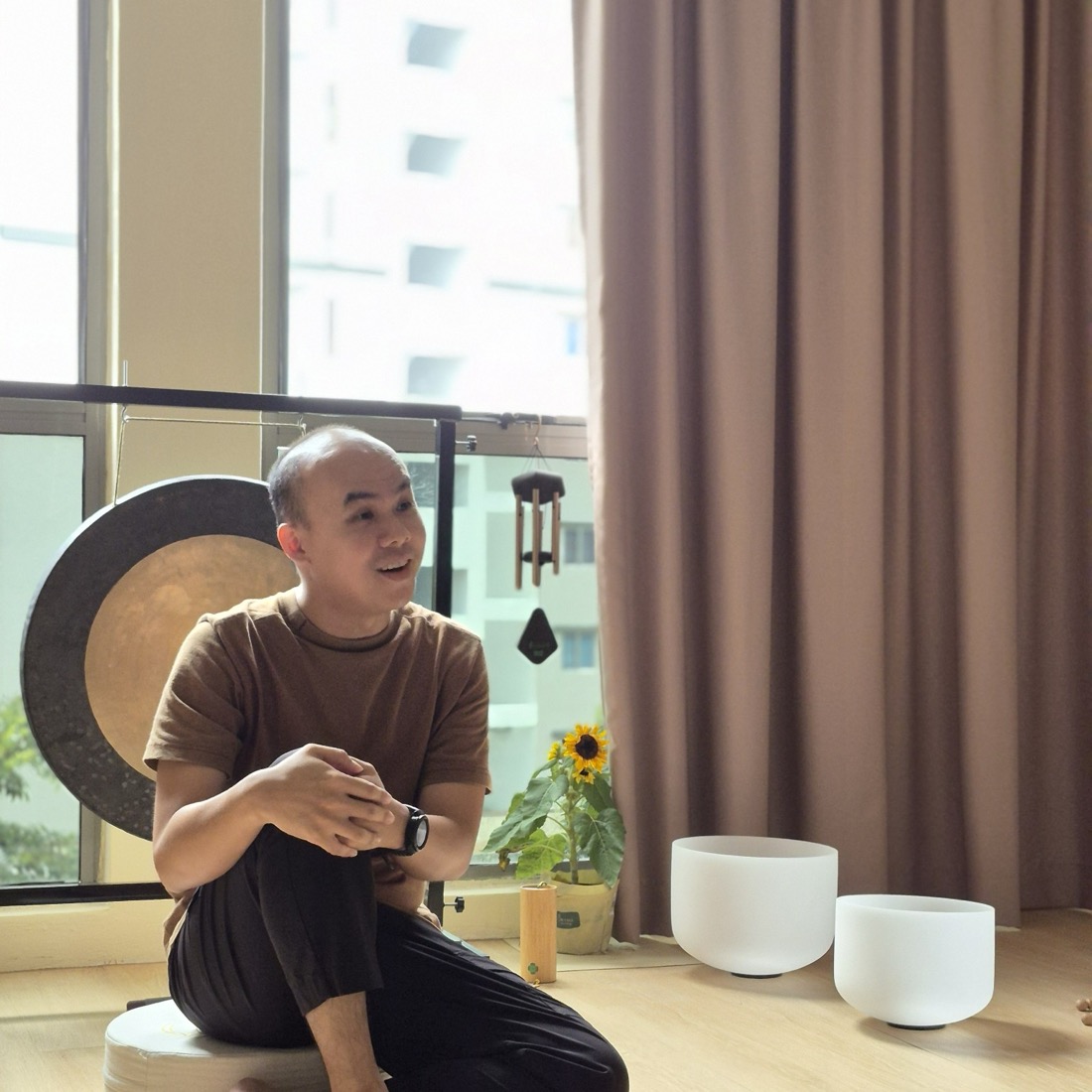
Breathwork suits people who feel persistently switched on and can't fully switch off; people who understand their own patterns intellectually but still find them hard to shift; people who have tried meditation and could not sit still with it; and teams working under sustained pressure. It requires no fitness level, no flexibility and no prior experience. Every practice is optional throughout and you can stop at any point.
Is breathwork suitable for beginners?
Yes. Most people who attend have never done it before. Beginner sessions use simple, gentle techniques — diaphragmatic breathing, longer exhales, the physiological sigh, humming — rather than the fast, intense styles that get shared on social media. You will be told what is coming before each stage, and nothing is a test.
What is the difference between breathwork and meditation?
They are complementary rather than competing. Many people find breathwork easier to start with.
| Breathwork | Meditation | |
|---|---|---|
| What you do | Deliberately change how you breathe | Observe, while breathing stays natural |
| Primary focus | The breath itself, as a tool | Attention, awareness, thought |
| How it tends to feel | Physical, active, sometimes emotional | Still, quiet, mental |
| Good for | People who need something concrete to do | People comfortable with stillness |
| Time to notice something | Often within a single session | Usually builds over repeated practice |
How does breathing affect the nervous system?
Breathing is one of the few bodily functions that runs automatically but that you can also take over deliberately, which is why it is a practical entry point for self-regulation. Slower breathing with a longer exhale is generally associated with a calmer state; faster, shallower breathing is associated with alertness and stress. Sessions here work with that relationship in plain, non-clinical terms — the aim is that you can recognise your own pattern and have something to do about it, not that you learn physiology.
Where can I experience breathwork in Malaysia?
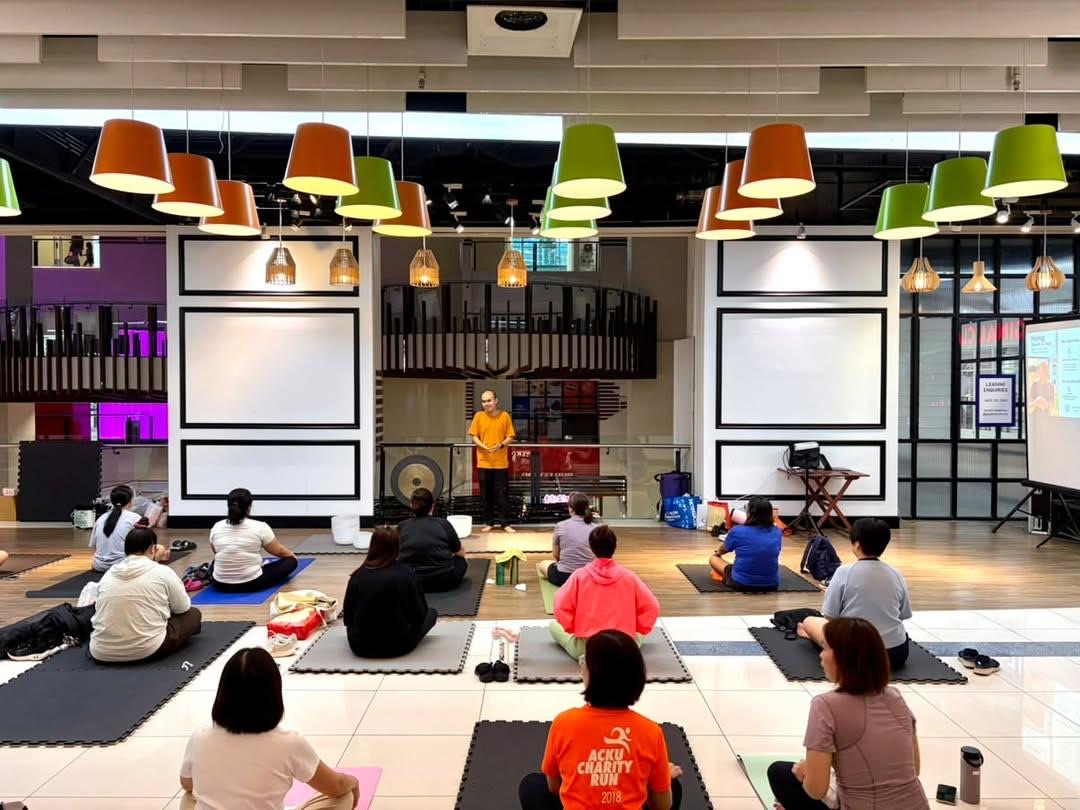
Hong Breath & Heal offers breathwork in three formats. Private 1-on-1 sessions are held in person in Petaling Jaya, Selangor, or online for anyone in Malaysia and overseas — 90 minutes, RM238, or RM720 for four sessions. Group breathwork and sound healing run at venues and partner spaces across the Klang Valley. Corporate sessions are delivered on-site at your own office across Kuala Lumpur, Petaling Jaya and the wider Klang Valley, for up to 100 participants, in English, Mandarin or Bahasa Malaysia. New clients start with a complimentary 30-minute consultation, which exists partly so we can tell you if this is not the right fit.
- 1-on-1, in person
- Petaling Jaya, Selangor — 90 minutes, RM238 (or RM720 for four)
- 1-on-1, online
- Anywhere in Malaysia or overseas — same format and price
- Group & sound healing
- Venues, studios and partner spaces across the Klang Valley
- Corporate, on-site
- Kuala Lumpur, Petaling Jaya and the wider Klang Valley — at your office, up to 100 participants
- Languages
- English · 中文 · Bahasa Malaysia
- Experience needed
- None. Most participants have never done breathwork before.
Are there breathwork workshops for companies in Malaysia?
Yes. The Corporate Stress Reset is a 4-hour structured programme that can be claimed through HRD Corp (HRDC), run as one 4-hour session or as two 2-hour sessions one to two weeks apart with the same group — Hong is an HRD Corp Accredited Trainer, and claims are processed via registered training providers, so your HR team is not coordinating across two parties. Allow roughly one month for grant processing. The 90-Minute Stress Reset is a single on-site session from RM2,388 for up to 40 participants, bookable in as little as three business days and funded by the company rather than claimed. Both are delivered as practical stress management, with no religious content and no requirement to change clothes or use mats.
Full corporate programme details and pricing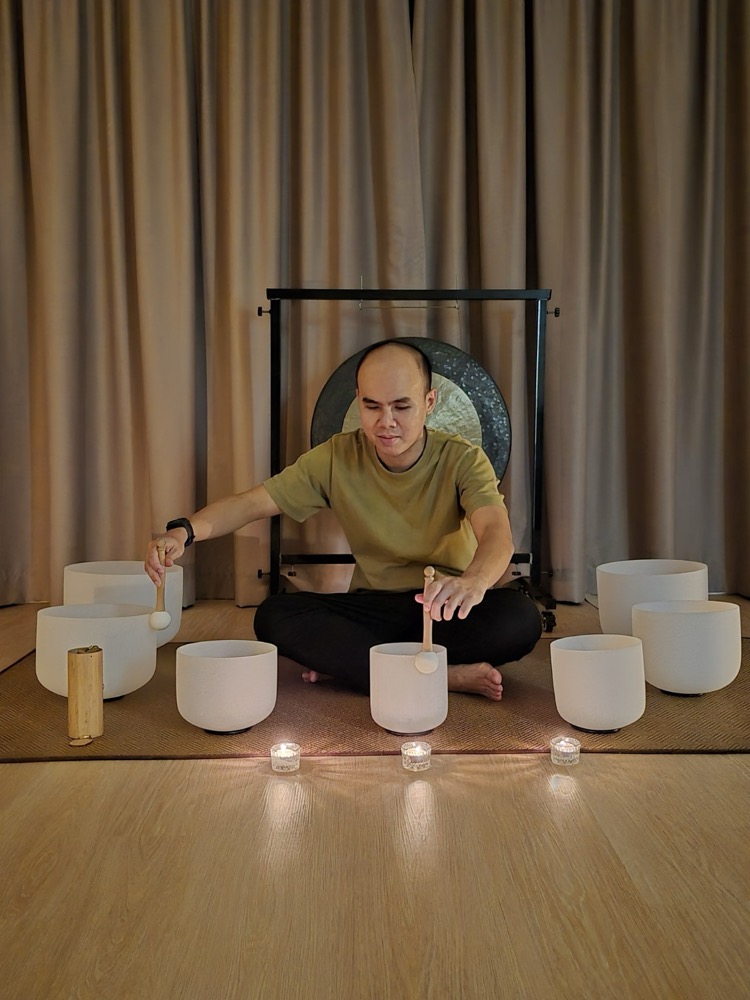
How does Hong Breath & Heal approach breathwork?
Gently and progressively, rather than intensely. A lot of breathwork is marketed on catharsis — the dramatic release. That is not the method here. The approach is trauma-aware and paced, working towards a point where the body can soften on its own rather than being pushed. In practice that means you stay in control of your own intensity throughout, and nothing is forced. The framing is body-based rather than spiritual: sessions are about breath, body awareness and self-regulation, described in plain language.
Common questions about breathwork
What is breathwork?
Breathwork is a wellness practice that uses intentional changes to your breathing — its pace, its depth, and the balance between inhale and exhale — to support relaxation, body awareness and emotional regulation. Some techniques are calming, some are activating, and some simply build awareness of how you are already breathing. It is a self-regulation practice rather than a medical treatment, and it does not replace medical or mental-health care.
What actually happens in a breathwork session?
A session at Hong Breath & Heal moves through four stages in order: noticing how you are currently breathing, building awareness of what your body is holding, practising guided breathing techniques you can repeat on your own, and finally lying down for a closing sound bath with crystal singing bowls and gong played live. A 1-on-1 session runs 90 minutes; corporate sessions run 90 minutes or 4 hours.
Is breathwork suitable for beginners?
Yes. Most people attending have never done breathwork before. Beginner sessions use gentle techniques such as diaphragmatic breathing, extended exhales, the physiological sigh and humming, rather than the fast or intense styles often shared on social media. Every technique is explained before it starts, participation is optional throughout, and you can stop at any point.
What is the difference between breathwork and meditation?
Breathwork deliberately changes how you breathe and uses the breath as the tool; meditation trains attention while breathing stays natural. Breathwork tends to feel physical and active, meditation tends to feel still and mental. Many people find breathwork easier to start with, because a restless mind is given something concrete to do rather than being asked to settle on request. They are complementary rather than competing.
Can breathwork help with stress?
Breathwork may support relaxation and help people manage everyday stress by giving them a deliberate way to influence their own state. Slower breathing, longer exhales and the physiological sigh are commonly used for this, and they can be done at a desk in under a minute. Breathwork is a wellbeing practice and is not a treatment for any diagnosed condition.
How does breathing affect the nervous system?
Breathing is one of the few bodily functions that runs automatically but that you can also take over deliberately, which is why it is a practical entry point for self-regulation. Slower breathing with a longer exhale is generally associated with a calmer state, while faster, shallower breathing is associated with alertness and stress. Sessions here work with that relationship in plain, non-clinical terms.
Is breathwork safe?
For most people, gentle breathwork is a low-risk practice, and every technique is optional — participants can stop at any point. Anyone who is pregnant, or who has epilepsy, asthma, a significant cardiovascular or respiratory condition, high blood pressure, glaucoma, or recent surgery should inform the facilitator beforehand so the practice can be adapted. Stronger breathing techniques are not used where they are unsuitable, and breathwork does not replace clinical treatment.
What is a sound bath?
A sound bath is a session where you lie down and rest while instruments — here, crystal singing bowls, gong and chimes — are played live in the room. Nothing is pre-recorded and no speakers are used. At Hong Breath & Heal the sound bath is the closing stage of a session rather than the whole of it: the active breathing work comes first, so the body is actually ready to rest by the time you lie down.
Where can I do breathwork in Kuala Lumpur or Petaling Jaya?
Hong Breath & Heal runs 1-on-1 breathwork in person in Petaling Jaya, Selangor, and delivers group and corporate sessions on-site across Kuala Lumpur, Petaling Jaya and the wider Klang Valley. Online 1-on-1 sessions are available anywhere in Malaysia or overseas. New clients start with a complimentary 30-minute consultation.
Are there breathwork workshops for companies in Malaysia?
Yes. Two formats are available: a 4-hour Corporate Stress Reset that can be claimed through HRD Corp (one 4-hour session, or two 2-hour sessions with the same group), and a 90-minute on-site session from RM2,388 for up to 40 participants that is company-funded and bookable in as little as three business days. Both are delivered as practical stress management, with no religious content.
Is breathwork too intense? What if I have tried it before and it was too much?
Not every breathwork practice is paced the same way. At Hong Breath & Heal intensity is built gradually rather than pushed from the start, the work stays within your limit rather than past it, and a release is guided if it comes but never forced. There is no shouting and no requirement to break through anything. People who found breathwork elsewhere too confrontational often start here with a 1-on-1 session so the pace can be set around them.
What happens if an emotional release comes up during breathwork?
If a release comes, it is guided rather than left to happen on its own. It might look like crying, some spontaneous movement, or the body shaking or trembling — all of which are ordinary. If nothing surfaces, nothing is forced and the session is not treated as having failed. You are not required to understand or explain what moved; the practice works through the body rather than through analysis.
Can breathwork help with sleep or digestion?
Indirectly, and only in a specific sense. Sleep and digestion both depend on the body being in a rest-and-digest state, and they are often the first things affected when someone has been running in fight-or-flight for a long time. Simple breathing practices can support the shift toward that calmer state, which may in turn make sleep and digestion easier. This is a wellbeing practice, not a treatment — if sleep or digestive problems persist, please see a doctor.
I am stressed but I cannot put it into words. Is breathwork still useful?
This is one of the most common reasons people come. Being told to express yourself is not much help when it is not clear who would understand, so at some point many people stop explaining — and the feeling stays in the body rather than leaving. It can show up as heaviness, muscles that never fully release, a tight throat or a clenched jaw. Breathwork works with those signals directly, without requiring you to narrate anything.
I work in healing or coaching myself. Why is self-practice still hard?
Knowing what you should be doing and having a nervous system that has caught up with it are two different things. That gap is where people slide into demotivation, or into a positivity that is performed rather than felt. Feeling genuinely positive usually means meeting the discomfort underneath first, and everyday life rarely gives space for that. Breathwork is a way to meet it in the body with someone present for that part.